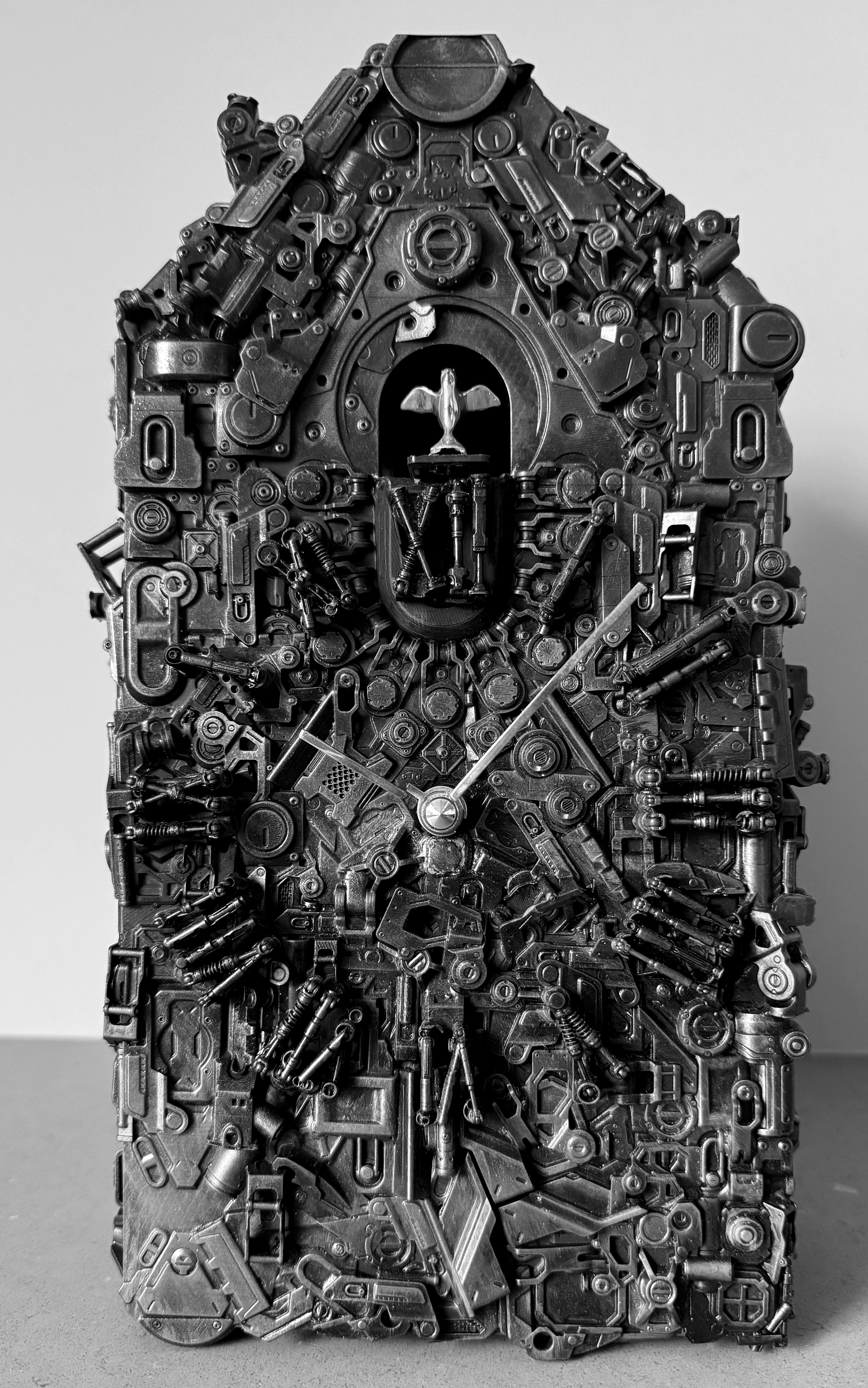
Cyberpunk Cuckoo Clock with silver Alessi bird, circa 2020-2024
Hi, this is Alan. Thanks for your interest.
Here's a pretty special item, a one-of-a-kind 3D-printed cuckoo clock with a sterling silver bird based on the famous Alessi kettle, and with silver hands.
The clock was conceived, designed and created by my friend Fred Boursier, in San Francisco. It was designed almost entirely using his Oculus Rift VR headset. Because of the methods used in its creation, along with much of the clock's physical features and design, together with the paint and surface treatments -- you really have to call this a "cyberpunk" clock. (His Oculus controller also happened to get signed by William Gibson at a book event just weeks before the coronavirus pandemic was declared, which adds some weirdly meaningful provenance to this clock.)

(Some of the pics, like this one, were taken before i installed the silver hands - sorry.)
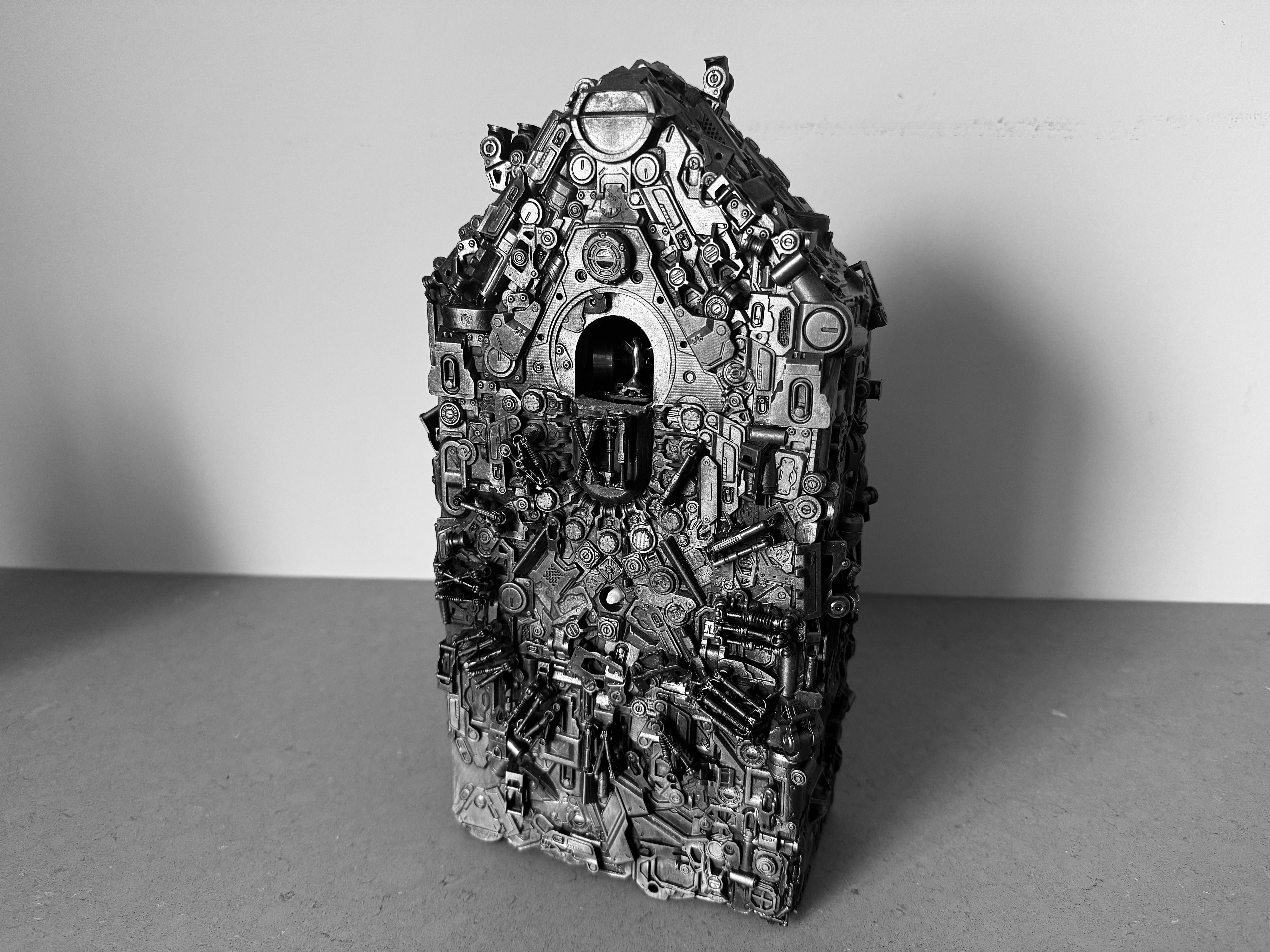
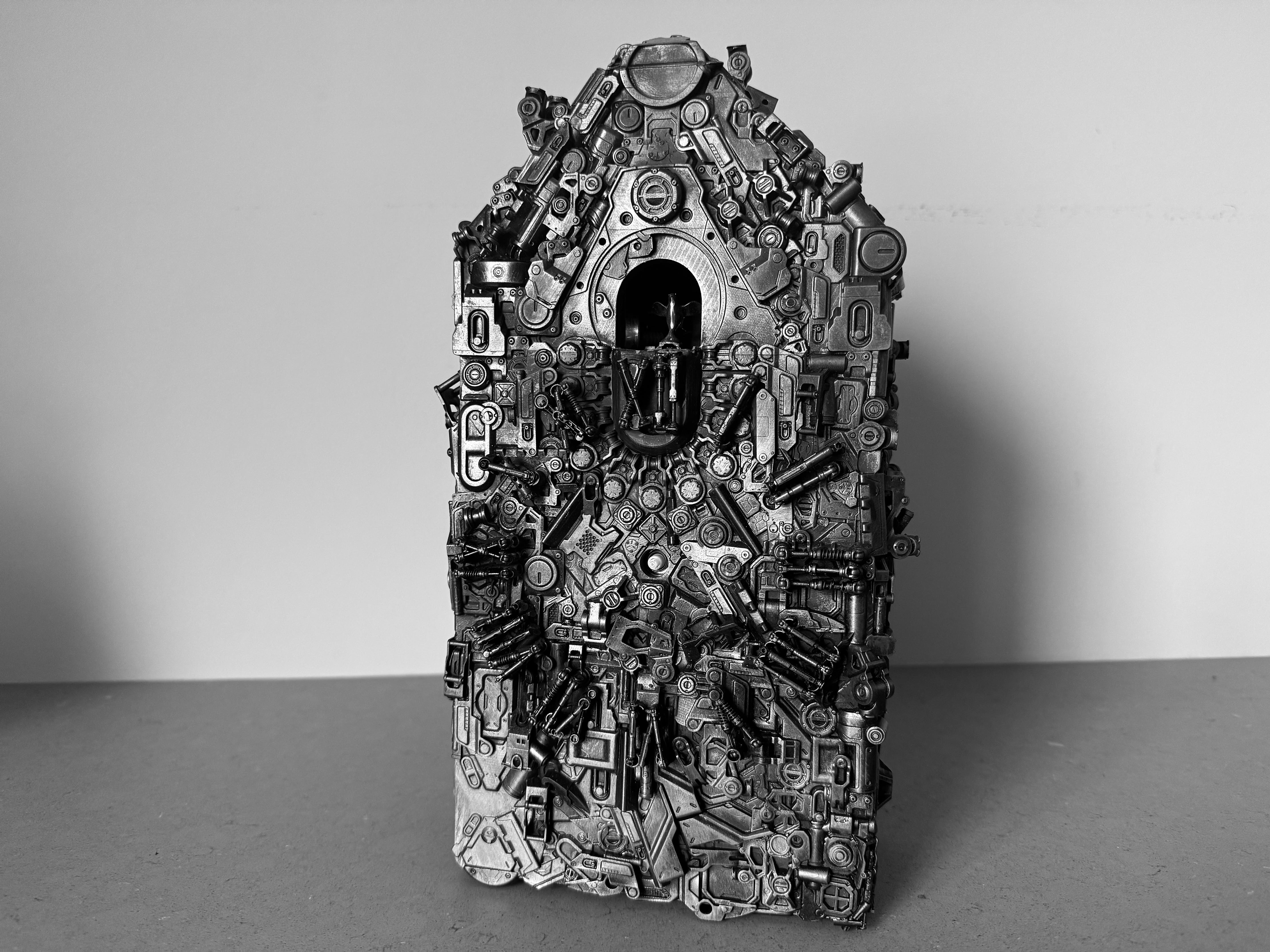
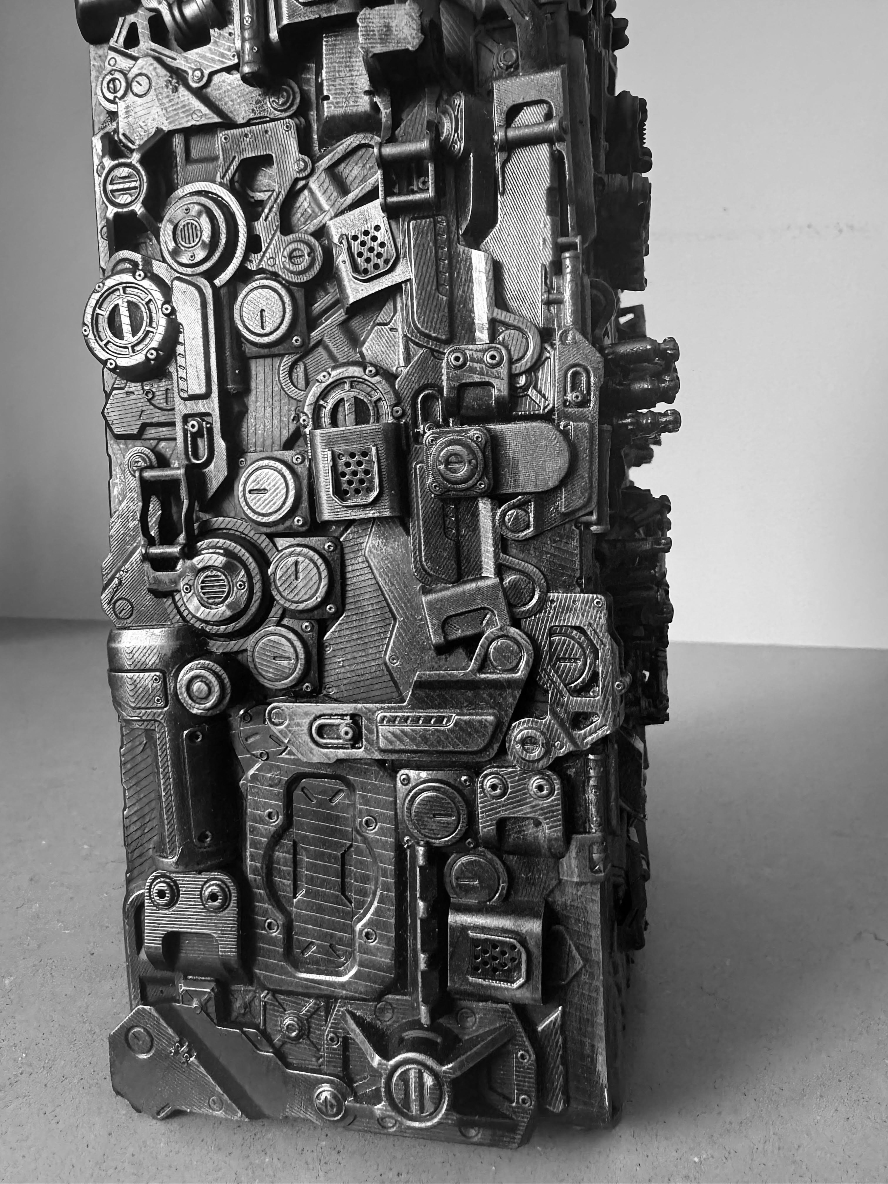
The clock took 26 hour to print using Fred's larger size resin printer, and is a fairly big clock. It stands about 12 inches tall (30 cm,) and has a thick, substantial shell. There's a lot to unpack with this clock, but i want to point out straight away the extensive surface design that covers the entire clock, designed by a process called "kitbashing," In this case it is like a form of "digital decoupage," where various surface elements called "greebles" were added piecemeal to achieve the complete effect. Most of these greebles came from commercially available kits, but some he made custom and a few he cribbed from here and there. You will likely recognize this greebling efffect used on the models for spaceships used in Star Wars, 2001 Space Odyssey, and others. Closeup pics below.
And before I go any further, I want you to see and hear this clock in action. (i can't figure out how to place a video directly inline to these Homestead pages, but they do allow Youtube embeds, so I put it to Youtube.) You can see the silver bird slides out of its platform, makes 18 cuckoo chirps, and then slides back into its house. I love that in addition to the signature cuckoo sounds, you can hear other random chirping of birds in the Black Forest. (Those extra birds really make me happy).

The origin of this clock was a joke. Fred had designed a few clocks already, including this one with floating (or drowning?) numerals. [Photo taken by him, from his Instagram]. So, told him I'd love to one day get one of his clocks, and joked "But don't send me one unless it has a functionng cuckoo clock bird." Well, he took that to heart and made this clock for me!

Back to the Oculus and VR, Cyberpunk and William Gibson.
Here's a Brazilian edition of the Gibson's 1984 novel Neuromancer, with cover created by Spanish artist Josan Gonzalez, "personifying the spirit of cyberpunk: a rebellious unflappability combined with human creativity and technical skill."
~ 40 years after that novel, Fred made this incredible clock using an Oculus Rift VR headset physically signed by the "Father of Cyberpunk" himself, and that provenance seems very cool to me.

I am definitely going to talk about the greebles, the kitbashing process, and general surface appearance of this clock. But first I need to talk about The Bird.
This bird in this cuckoo clock is a scaled-down version of the bird that sits at the spout of the Alessi 9093 kettle, designed in 1985 by American architect Michael Graves. In the 1980s, Albert Alessi invited 11 prominent architects to design limited-edition tea sets, and the 9093 was an eventual result of that initiative.
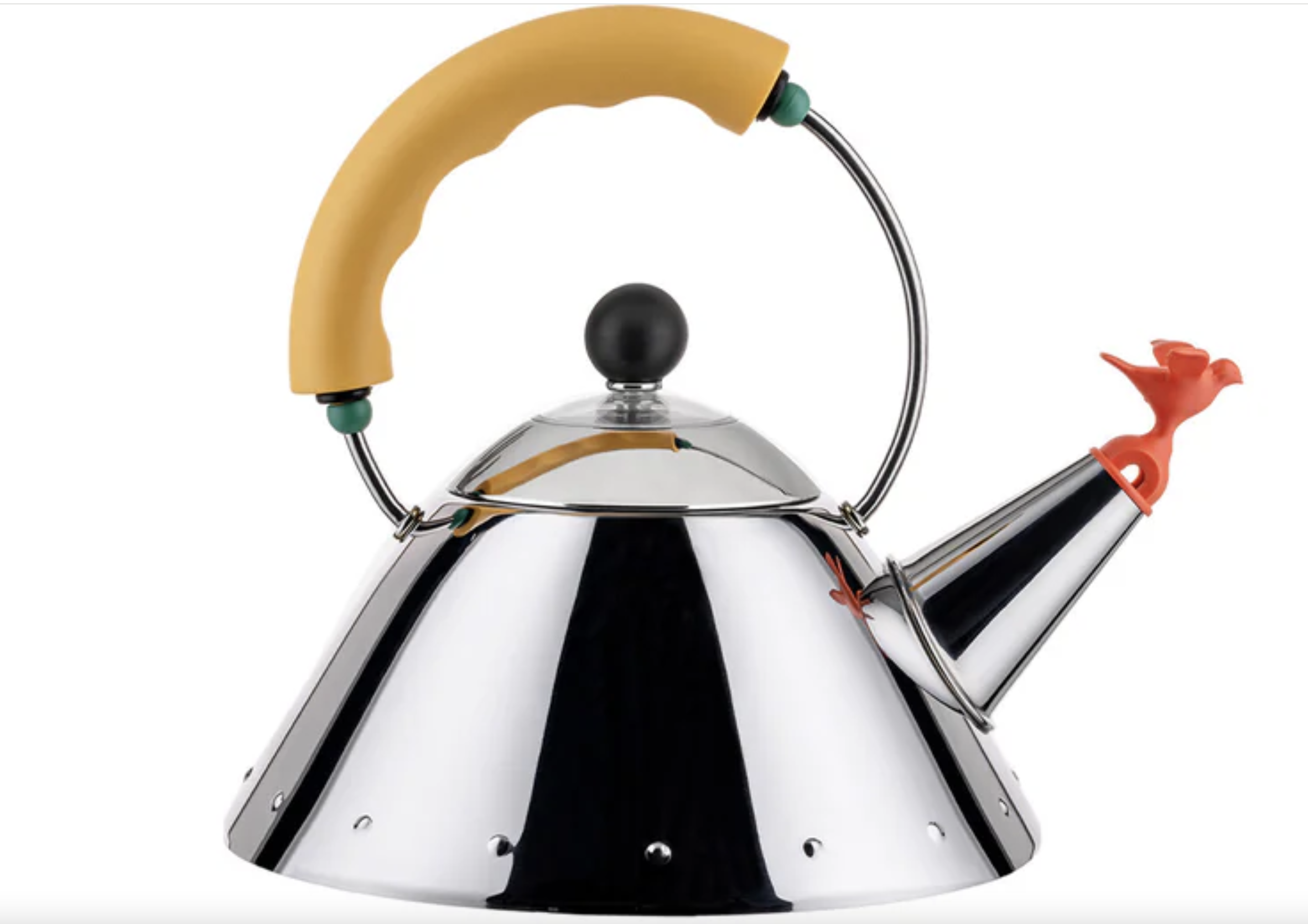
Alessi wanted a kettle that could boil water faster, had an insulated handle, reduce exposure to open flames, whistle loudly when boiling, and add a dose of whimsy. Here you see the kettle in mirror-polished steel, with a plastic bird at the spout, with the gaps visible which create the whistle from escaping steam. If you want to see Graves' original sketch for the 9093, click here.

So, Fred sourced a cuckoo clock mechanism from Korea, removed the bird they supplied and affixed the silver Alessi kettle bird. As mentioned, it's smaller than the kettle bird, owing to the size of the clock opening. The 3D printing in sterling silver was made by Shapeways, in Eindhoven, Netherlands, and was finished to a high polished surface. For the bird model, Fred was able to find an original source code that Alessi publishes (mainly for use by various interior decorators who have used the bird in different settings.)
If you ask me, the addition of this bird takes an already great clock and sends it into the stratosphere.
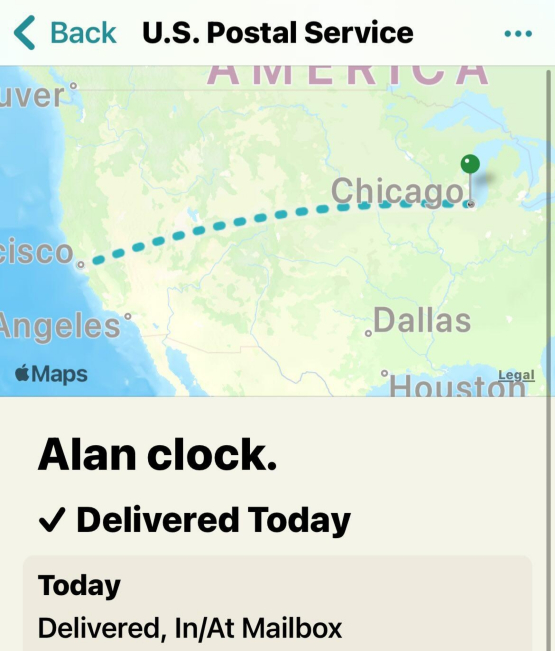
(Was a great day when I got this clock. Fred conceived the idea around 2020, and worked on the project on-and-off; I received the finished clock in 2024.

The hands are also sterling silver, and are simple, modern. Lacking any ornate details, they are the perfect design, complementing the complex, highly-embellished surface of the clock.
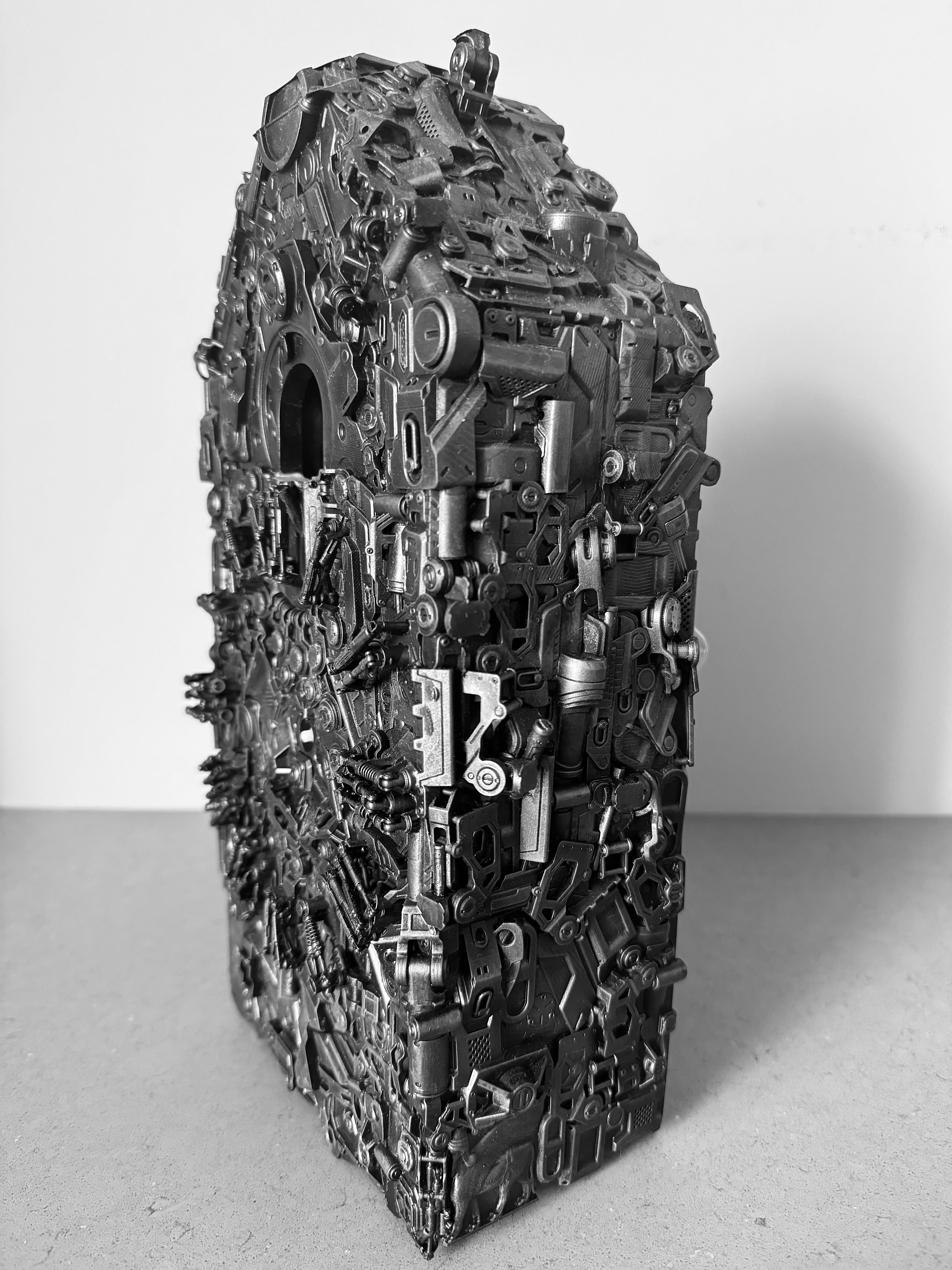
I want to talk now about one of the most defining features of this clock, the surface. At first, though I loved it, I didn't know what to call it, or even how to describe it. But it is the result of a process of using small digital models -- greebles -- that are commercially available in kit packages, and then using his Oculus VR headset (and Gravity Sketch software) to essentially create "decoupage," but digitally. The greebling process, also in the broader realm of "kitbashing," helps to create a sense of "scale through complexity," and for sci-fi moviie spaceships, "detailing added to the surface of a larger object that makes it appear more complex or technologically advanced."
This may also be the purest form of the architect's joke about "Breaking up the massing."
So, the three main rectangular surfaces, and the surfaces of the pitched roof, are totally filled with greebling. Let's take a few close-up looks. Few pics below, and then text will continue below the pics.
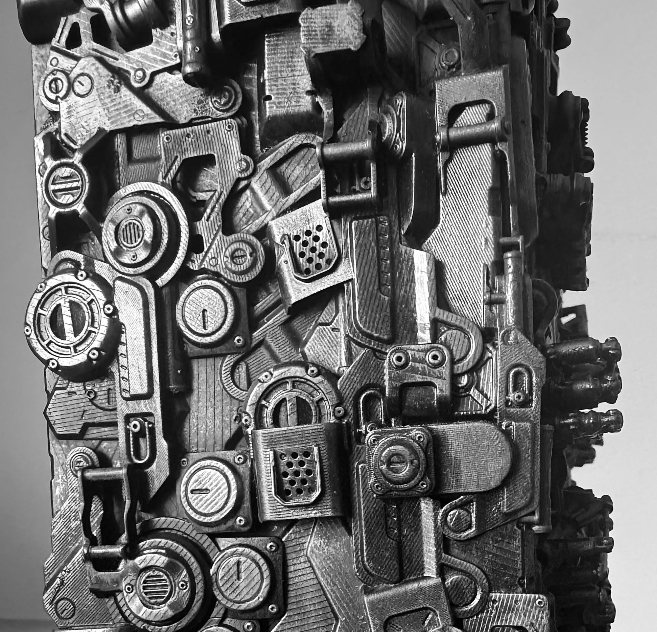



This one above I am showing to highlight another feature of this clock: the paintwork and general post-printing treatments. The clock was 3D printed using grey resin, but was initally grey, not black. Fred then applied various coatings of paint and other coatings, to create a grimy, oily and generally beaten-up look, as befitting a kind of cyberpunk aesthetic.
I asked him about the treatment, and he said. "The base layer is a Molotow graffiti ink, extremely opaque and dries thin. I stabbed with a brush a couple undercoats in places I wanted a little extra texture. The metallic, rusty, and grimy paints are all hobby/model paints. The oily one is a famous one in Warhammer gaming called Nuln Oil, and is great at highlighting texture as it collects in the cracks."
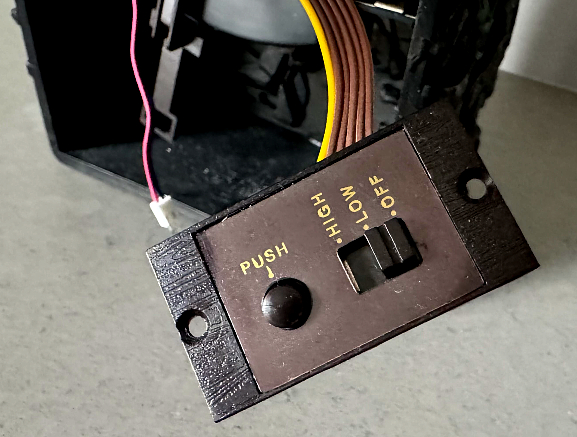
Hidden in the back of the clock is the controller. This clock is great. See that red cord dangling to the left wth the small white module at the end? That's a light sensor. So, the clock knows when it's dark, so it won't be cukcoo-ing at 3 am! You can set the bird chirp volume to high or low, or turn the chirp off completely at the OFF setting. Finally, by pushing the round button, the bird will chirp on demand, just for fun, no matter what time it is!
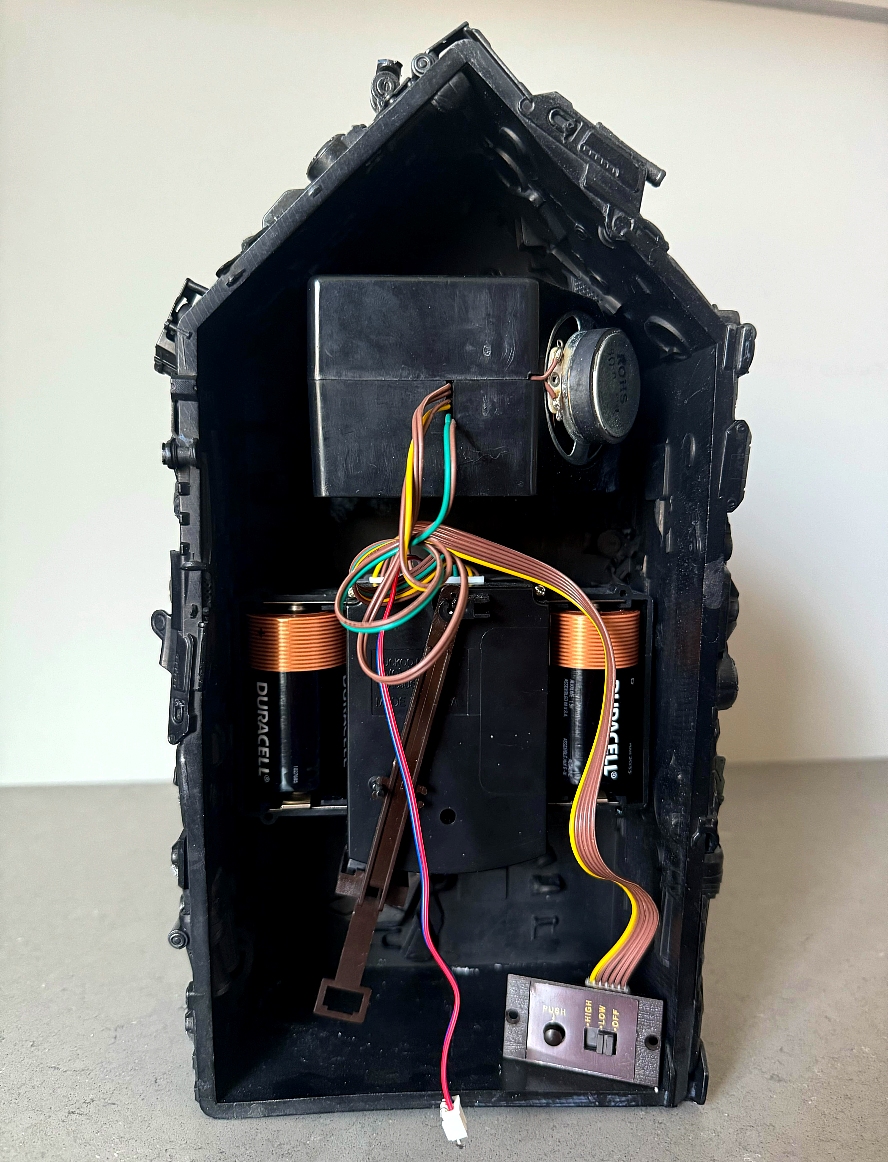
Full back of the clock. Takes two D batteries. (And I'm sorry, but for the last 35 years when I think about D batteries, all I can think of is this scene from a 1980s movie. Warning, many F words.)
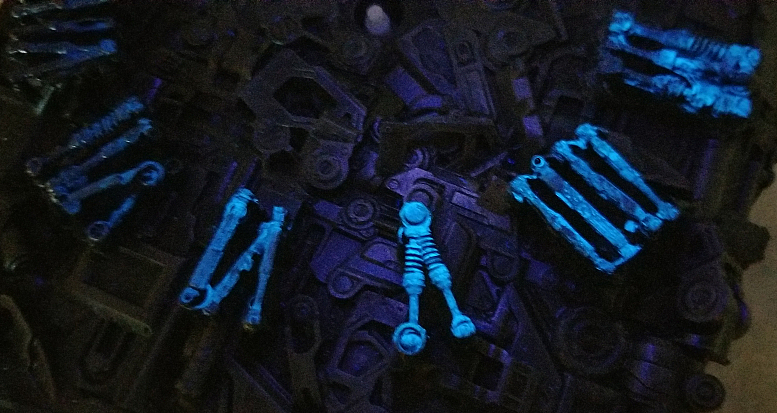
Wait, what is this? It's a sort of "easter egg" that he put in there, coating the Roman numerals of the clockface with "Ghost Blue," a type of fluourescent ink, invisible until UV light applied. I happen to have a UV lamp (of course I do,) and was able to see it glow. Pretty damned cool.
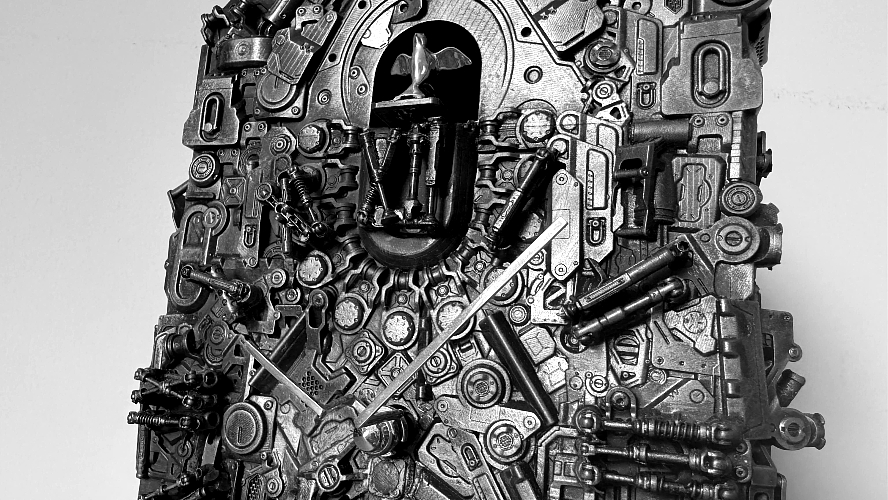
I have yet to mention much about the Roman numerals. Firstly, just the choice of Romans over Arabic truly adds to the punk appearance. By jamming together "ancient" with "technological" it kind of captures the aesthetic. I generally don't love Romans on wristwatches. But here, I love it.
The applied elements that make up the Roman numerals were made from a deconstructed piston set.
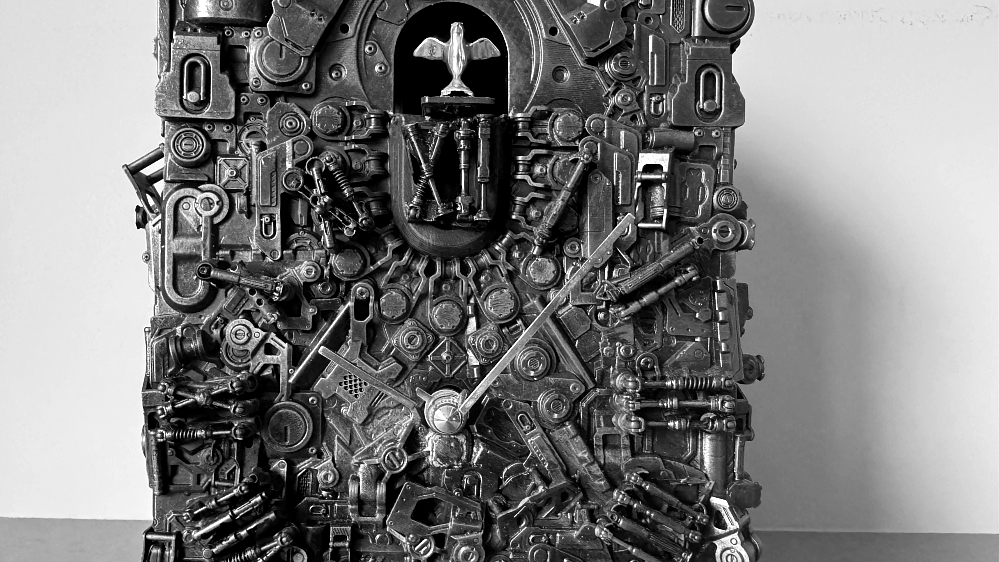
Another look at the. numerals, as well as a good look at the hands and the bird.
I'll leave you here once again this short video.
It's an amazingly cool clock, and a really wonderful gift. One of a kind, worldwide!
Fred poured a lot of creative energy, time, and materials into this, and created a masterpiece. Very grateful to have it!
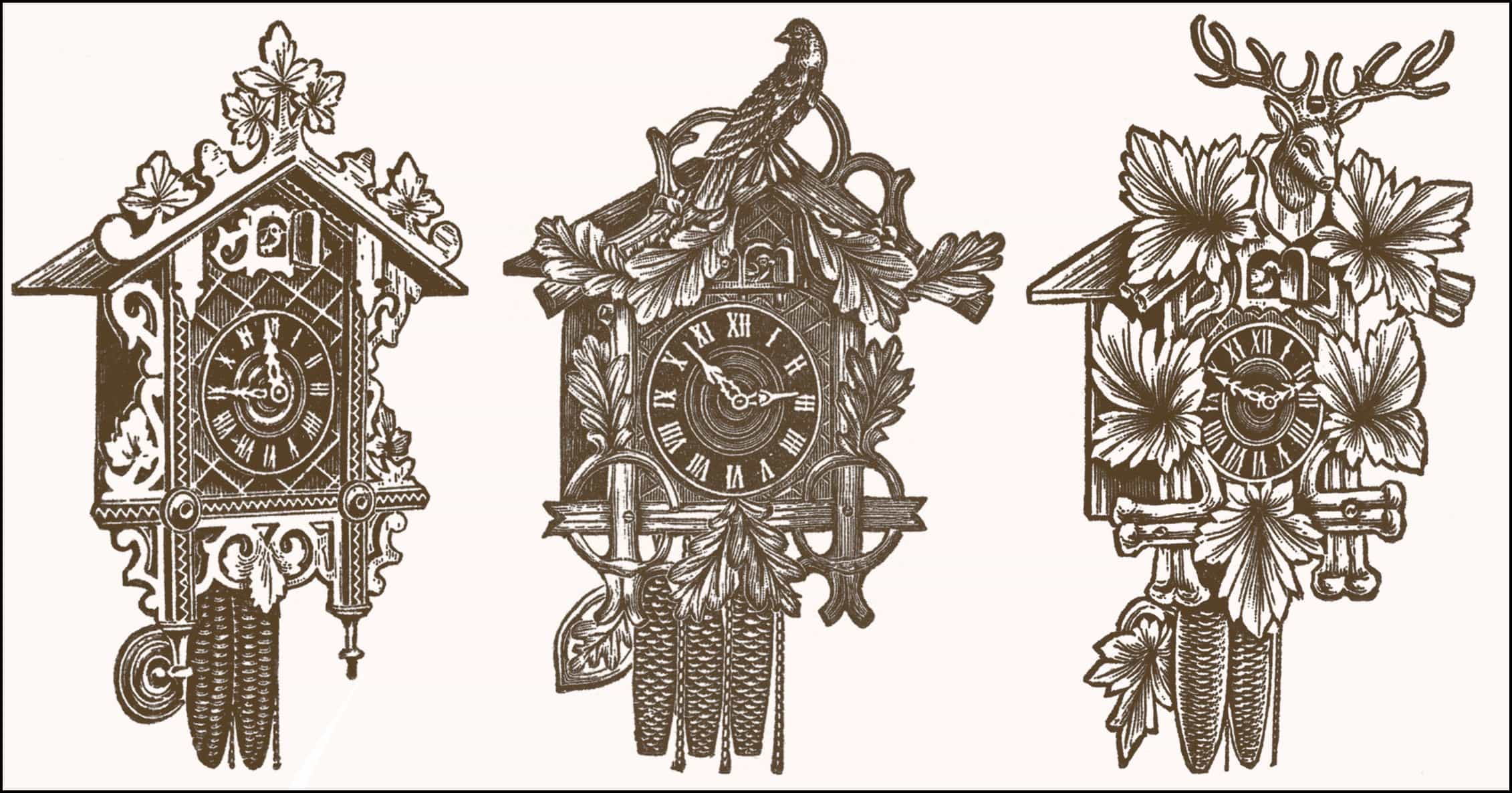
Thank you for reading. If you have any interest in the history of cuckoo clocks, see these links. Link 1. Link 2. Link 3. Link 4.
Alan
June 2025
Few more "outtakes," scroll below.


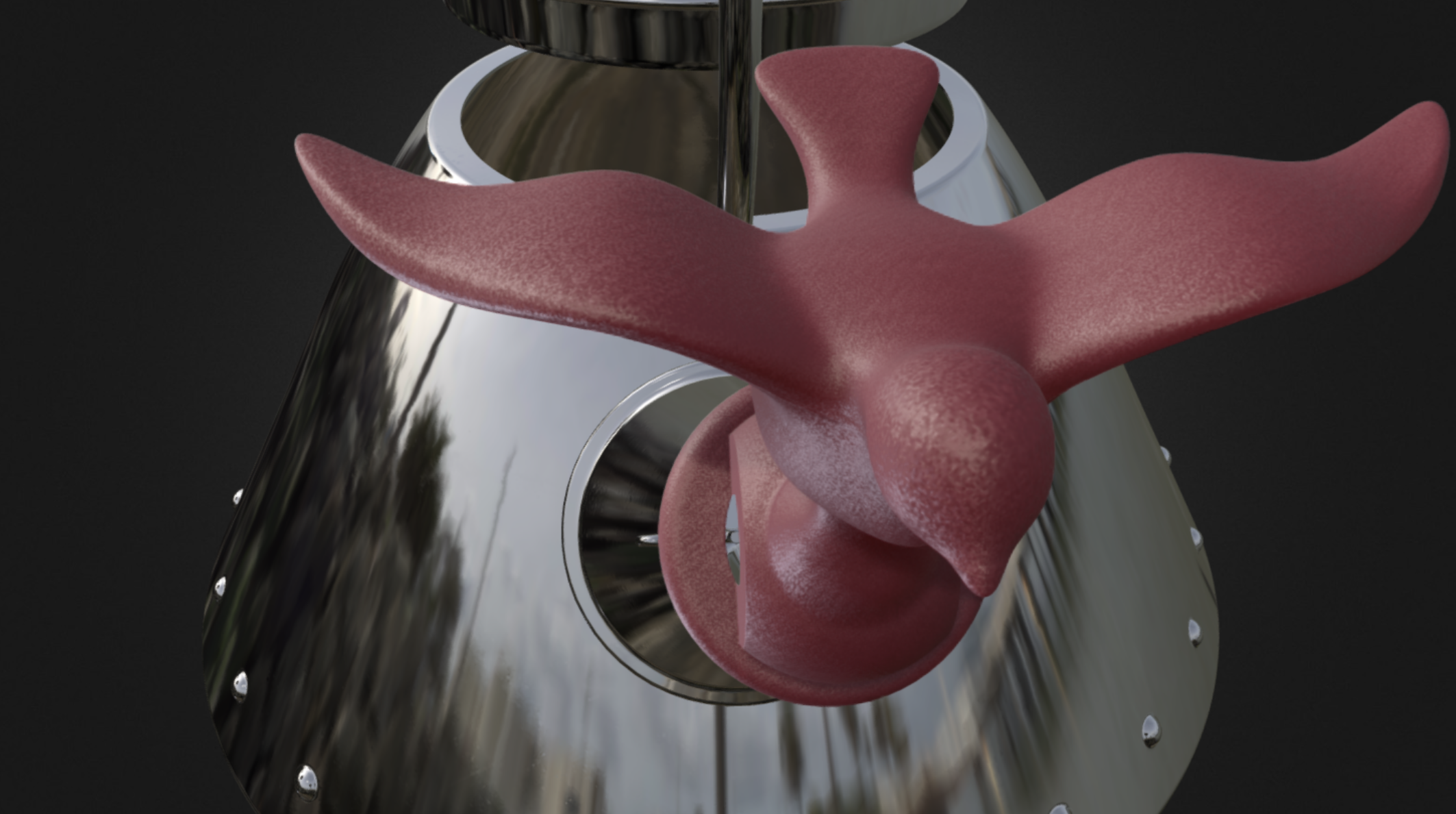
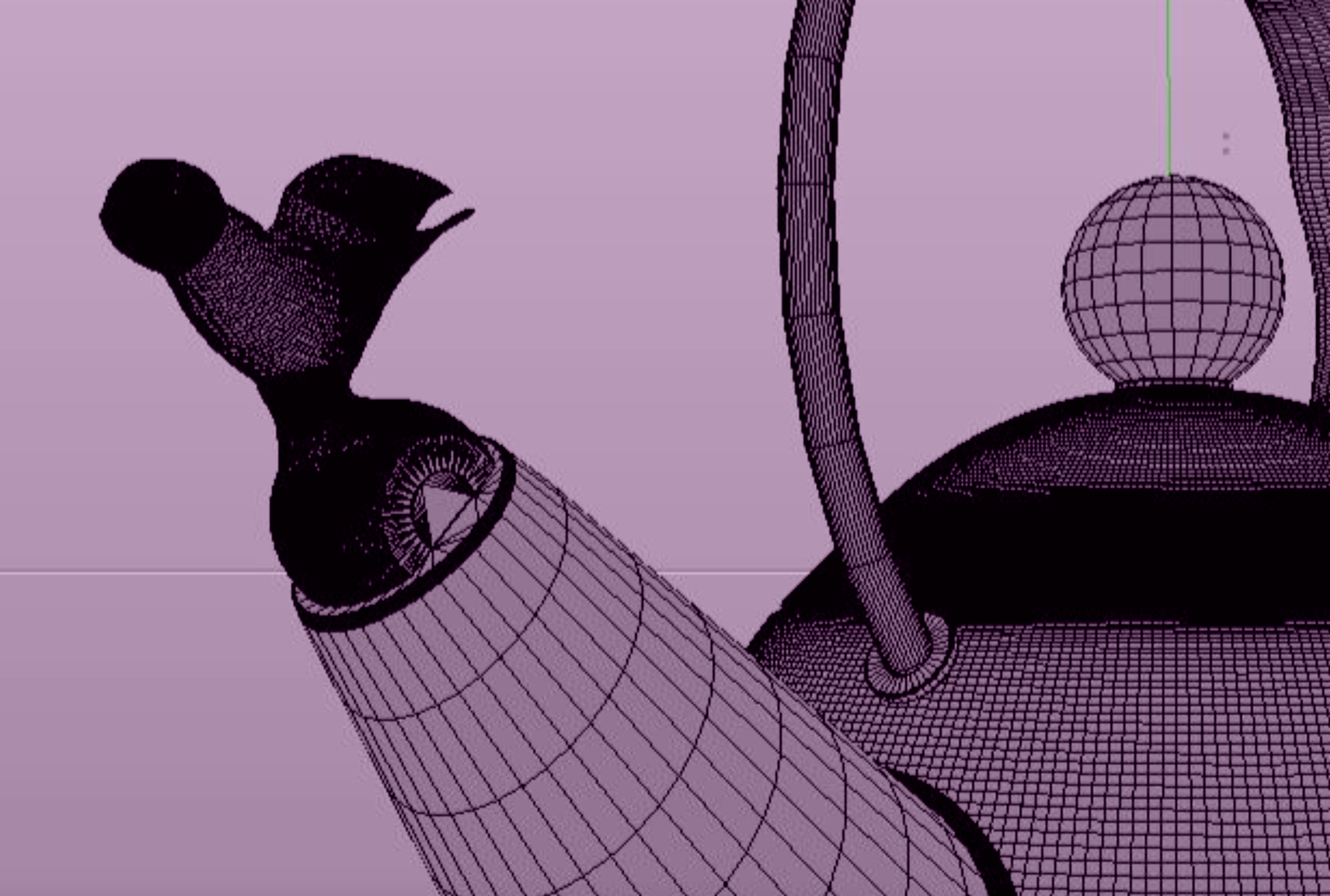
By Manfred Kostka. Kettle Modeled in Rhino 5. Bird whistle was modeled in Cinema 4D and Zbrush. At Michael's site, you can rotate the model around zoom in, etc. This view looks so crazy.

You can get a real one in gold here for £60.00.
.
Nice package design on the cardboard box.
(end)